Dreamhearts: A Sweet Script for Branding
There I was, staring at a blank brand board, trying to figure out how to bring a client’s vision to life. They wanted something warm, inviting, and a little bit whimsical—perfect for a small café that served artisanal pastries and locally roasted coffee. After testing a few options, I landed on Dreamhearts, a lovely handwritten font with a sweet and classy style. It felt like the missing piece of the puzzle.
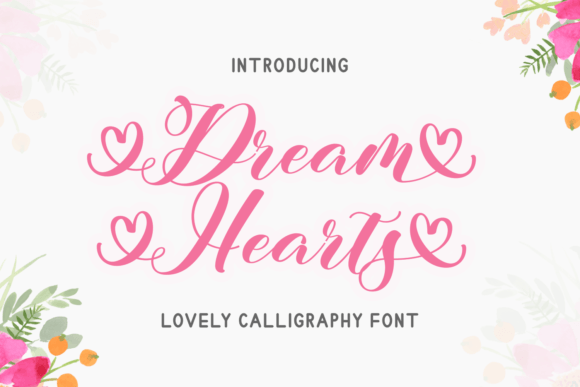
Dreamhearts has a soft, flowing script that feels handcrafted, almost like someone took a pen and wrote it just for you. The strokes are elegant but not overly ornate, making it versatile enough for both digital and print applications. It carries a sense of authenticity and charm, which made it ideal for a brand that valued craftsmanship and personal touch.
Testing Dreamhearts in Real-World Design
I started by placing it on a logo draft. The font added a gentle, friendly energy that complemented the client’s desire for a cozy, approachable vibe. I experimented with different sizes and spacing, finding that it worked best as a headline or display font. Its curves and ligatures gave it a unique personality, making it stand out without being too flashy.
Next, I tried it on packaging mockups. The font looked great on label stickers and product boxes, adding a handmade feel that aligned with the café’s branding. I also used it for social media graphics and website headers, where its visual appeal helped draw attention without overwhelming the design.
One thing I noticed was how Dreamhearts handled different backgrounds. On light-colored surfaces, it had a clean, crisp look, while on darker tones, it still maintained its legibility and character. That versatility made it a reliable choice for various applications, from business cards to shop signs.
How Dreamhearts Fits into Brand Identity
When building a brand identity, consistency is key. Dreamhearts helped maintain a cohesive look across all materials. Whether it was a menu, flyer, or email newsletter, the font provided a unifying element that tied everything together. Its elegance and warmth contributed to a brand perception that felt authentic and trustworthy.
Readability was another factor I considered. While Dreamhearts is primarily a display font, it worked well in short-form text, such as headlines or captions. However, I avoided using it for body copy, as it could become difficult to read in larger blocks. Instead, I paired it with a simple sans serif font for body text, creating a balanced contrast that enhanced the overall design.
Font pairing is always an important step. I found that Dreamhearts paired nicely with a classic serif font for a timeless feel, or with a modern sans serif for a more contemporary twist. The combination allowed me to keep the design fresh while maintaining a strong visual hierarchy.
Practical Tips for Using Dreamhearts
If you're considering using Dreamhearts in your projects, I recommend testing it thoroughly before finalizing any designs. Try it on different surfaces, in various sizes, and with different color schemes to see how it performs. Pay attention to how it looks in both digital and print formats, as the subtleties can change depending on the medium.
Also, check the font’s included styles and alternates. Dreamhearts likely offers multiple variations, which can add depth and flexibility to your design work. If it includes ligatures or special characters, those can be useful for creating unique typographic effects.
For commercial use, make sure the licensing allows for the intended application. If you’re working on a project for a client, confirm that the font license covers all necessary uses, including web, print, and digital assets.
Where Dreamhearts Shines
Dreamhearts excels in areas where a personal, artistic touch is needed. It works well as a logo font, especially for brands that want to convey a sense of creativity and individuality. It also makes a great accent font when paired with other typefaces, adding a subtle yet impactful detail to a design.
In editorial design, it can be used for headings or pull quotes, giving a story a more engaging and visually appealing structure. For packaging design, it adds a handmade quality that can differentiate a product on the shelf. And in web design, it can be used for hero sections or call-to-action buttons, drawing attention without disrupting the flow of content.
Whether it's for a small business, a creative studio, or a boutique, Dreamhearts brings a sense of warmth and sophistication that can elevate any design. Its versatility and charm make it a valuable addition to any designer’s toolkit, especially when working on projects that require a human touch.
As I wrapped up the branding project, I felt confident that Dreamhearts had played a key role in shaping the café’s visual identity. It wasn’t just a font—it was a part of the story, helping to create a brand that felt real, thoughtful, and beautifully designed.